Researchers have demonstrated how carbon dioxide can be captured from industrial processes, or even directly from the air, and transformed into clean, sustainable fuels using solar energy.
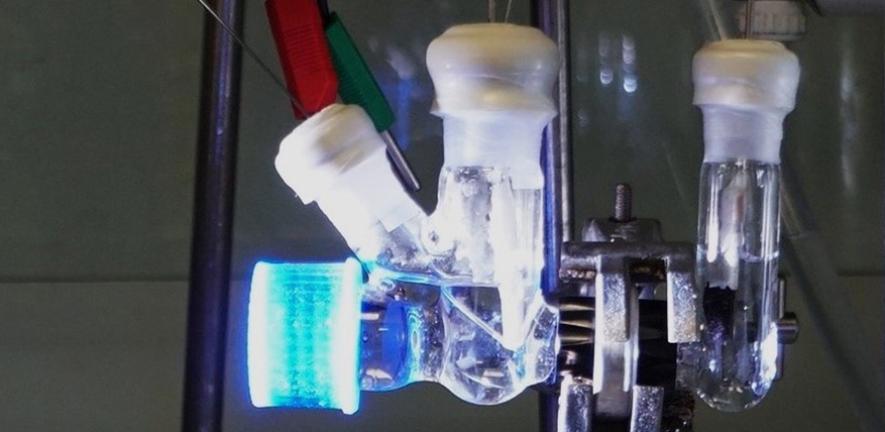
The researchers, from the University of Cambridge, developed a solar-powered reactor that converts captured CO2 and plastic waste into sustainable fuels. In tests, CO2 was converted into syngas, a key building block for sustainable liquid fuels, and plastic bottles were converted into glycolic acid, which is widely used in the cosmetics industry.
Although improvements are needed before this technology can be used at an industrial scale, the results, reported in the journal Joule, represent another important step toward the production of clean fuels to power the economy.
The research group, led by Professor Erwin Reisner and based in the Yusuf Hamied Department of Chemistry, has been developing sustainable, net-zero carbon fuels inspired by photosynthesis, and using artificial leaves to convert CO2 and water into fuels.
“We’re not just interested in decarbonisation, but de-fossilisation, we need to completely eliminate fossil fuels in order to create a truly circular economy,” said Reisner. “In the medium-term, this technology could help reduce carbon emissions by capturing them from industry and turning them into something useful, but ultimately, we need to cut fossil fuels out of the equation entirely and capture CO2 from the air.”
The researchers adapted their solar-driven technology so that it works with flue gas or directly from the air, converting CO2 and plastics into fuel and chemicals using only the power of the sun. By bubbling air through the system containing an alkaline solution, the CO2 selectively gets trapped, and the other gases present in air, such as nitrogen and oxygen, harmlessly bubble out. This bubbling process allows the researchers to concentrate the CO2 from air in solution, making it easier to work with.
The integrated system contains a photocathode and an anode. The system has two compartments: on one side is captured CO2 solution that gets converted into syngas, a simple fuel. On the other plastics are converted into useful chemicals using only sunlight.
“The plastic component is an important trick to this system,” said co-first author Dr Motiar Rahaman. “Capturing and using CO2 from the air makes the chemistry more difficult. But, if we add plastic waste to the system, the plastic donates electrons to the CO2. The plastic breaks down to glycolic acid, which is widely used in the cosmetics industry, and the CO2 is converted into syngas, which is a simple fuel.”
The scientists are currently working on a bench-top demonstrator device with improved efficiency and practicality to highlight the benefits of coupling direct air capture with CO2 utilisation as a path to a zero-carbon future.


Latest News
-
Charity issues nature loss warning to business leaders
-
Most admired corporate-non-profit partnerships revealed
-
UK firms halve proportion of profits they give to charity
-
Tesco’s charity link up provides six million hygiene products for families in need
-
Four in five UK cities ‘highly vulnerable’ to extreme heat, warns report
-
Pub chain signs energy deal amid renewable electricity boost plans







© 2019 Perspective Publishing Privacy & Cookies
Recent Stories